Every week, the same tension fills boardrooms across the DTC landscape. As the week closes, the gap between projected and actual revenue widens, and the instinct is always the same: sacrifice price to force volume.
Blanket discounting becomes the business model. It starts as a temporary fix (a 30% off site-wide sale to bridge a revenue gap) but quickly metastasizes into a long-term dependency. While the immediate revenue spike provides short-term relief, the hangover is severe. Margins erode, brand equity dilutes, and most dangerously, customers are trained to wait.
Strategic discounting is a powerful lever for growth; panic discounting is a slow-motion liquidation of brand value. But if your business has real discount dependency, you already know that simply stopping isn’t an option. You cannot turn off the tap without crashing cash flow.
The solution isn’t to stop discounting overnight. The solution is to transition strategically. This guide outlines exactly why you are stuck and provides a phased operational roadmap to recover your pricing power without destroying your business.
The Anatomy of Brand Erosion
To build the internal case for change, you must articulate the full cost of your current strategy. It goes beyond simple margin loss; it’s about the structural degradation of your business model.
Customer Conditioning
You are training your customers to be price-sensitive. Reference price theory explains why discounts work so well in the short term: customers enter with a price expectation shaped by the market, and when your offer undercuts it, the deal feels like a win. They buy.
But here’s the trap: that discounted price becomes their new anchor. The next time they see your product at full price, it doesn’t feel like the actual price. It feels like a markup. You won the acquisition and lost the customer’s willingness to pay.
The pattern is consistent across the DTC brands we work with: customers acquired on deep discounts buy less often, churn faster, and generate significantly lower lifetime value than full-price cohorts. You aren’t just acquiring cheaper customers; you’re acquiring worse ones.
Margin Math
The math of discounting is punishing. Consider a product with a $100 price point and $55 cost of goods (a healthy 45% gross margin). At a 30% discount, the selling price drops to $70 but the cost of goods stays at $55, compressing gross profit from $45 to $15 per unit. To maintain the same gross profit dollars, you now need to sell three units for every one you used to sell at full price.
At first, discount-driven audiences are large, cheap to reach, and fast to convert. The CAC looks great on a dashboard. But you’ve just tripled your volume while cutting your margin per unit by two-thirds, and you’ve filled your customer file with buyers who were attracted by price, not by your brand. They’ll wait for the next sale, and the next one, and the next one. In the meantime, your CAC will keep rising as you exhaust your in-market audience, compressing your margins more and more until you’re actually losing money, not making money.
The Alternatives to Discounting
If blanket discounts are bleeding your margins, what’s the alternative? You’ve likely tried some of these tactics before. The difference comes down to execution discipline, not the tactics themselves. These three strategies work when applied systematically, not as one-off experiments.
Strategy 1: Lock Cash into Your Ecosystem
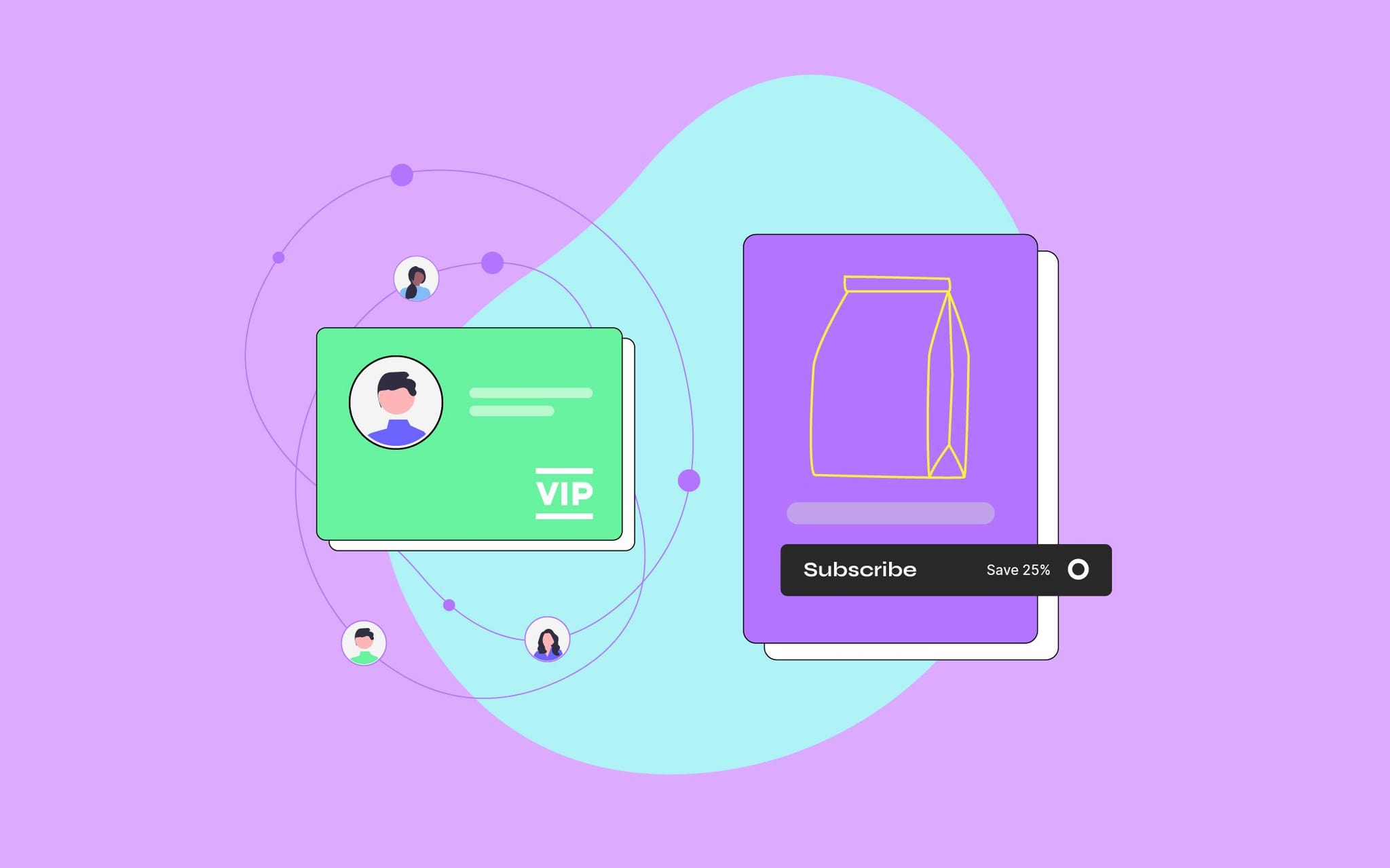
Instead of giving customers 30% off that they can take anywhere, give them that value back in a form that requires them to return to your brand. This means loyalty points or store credit.
The mechanics are simple: a customer who would have received a 30% discount instead receives equivalent value as points in a loyalty program or as a credit applied to their account. The cost to you is lower due to breakage (not everyone redeems), and you maintain your reference price. A $100 product stays $100; the customer just has $30 in their account to use on the next purchase.
Store credit works particularly well for win-back flows and cart abandonment. Instead of sending a percentage-off coupon, send a $20 credit. It maintains pricing integrity and typically increases AOV, as customers often spend more to use up the credit rather than letting it expire.
Loyalty points offer similar mechanics but with more flexibility in how customers redeem. Cash-back points are the default, but you can also allow redemption for other benefits depending on your program structure. The key advantage over direct discounts is breakage and the psychological commitment to your brand that comes with an account balance.
Strategy 2: Add Value Instead of Cutting Price
Shift the offer from price reduction to value addition. The principle is simple: give customers something that feels valuable but costs you less than a percentage-off discount.
This includes tangible additions like free shipping, extended returns, or gifts-with-purchase using slow-moving inventory. But it also includes access and exclusivity: early access to new drops, exclusive products, VIP experiences, or priority support. These carry high perceived value at a fraction of the cost of a cash discount.
Value-adds work best when the perceived value is high but the actual cost is low. Free shipping on orders over a threshold costs you the shipping subsidy but increases AOV. An extended return window costs you nothing unless the customer actually returns something. Early access costs you nothing but makes customers feel special. A GWP using dead stock turns a sunk cost into a conversion driver.
Strategy 3: Improve Your Discount Targeting
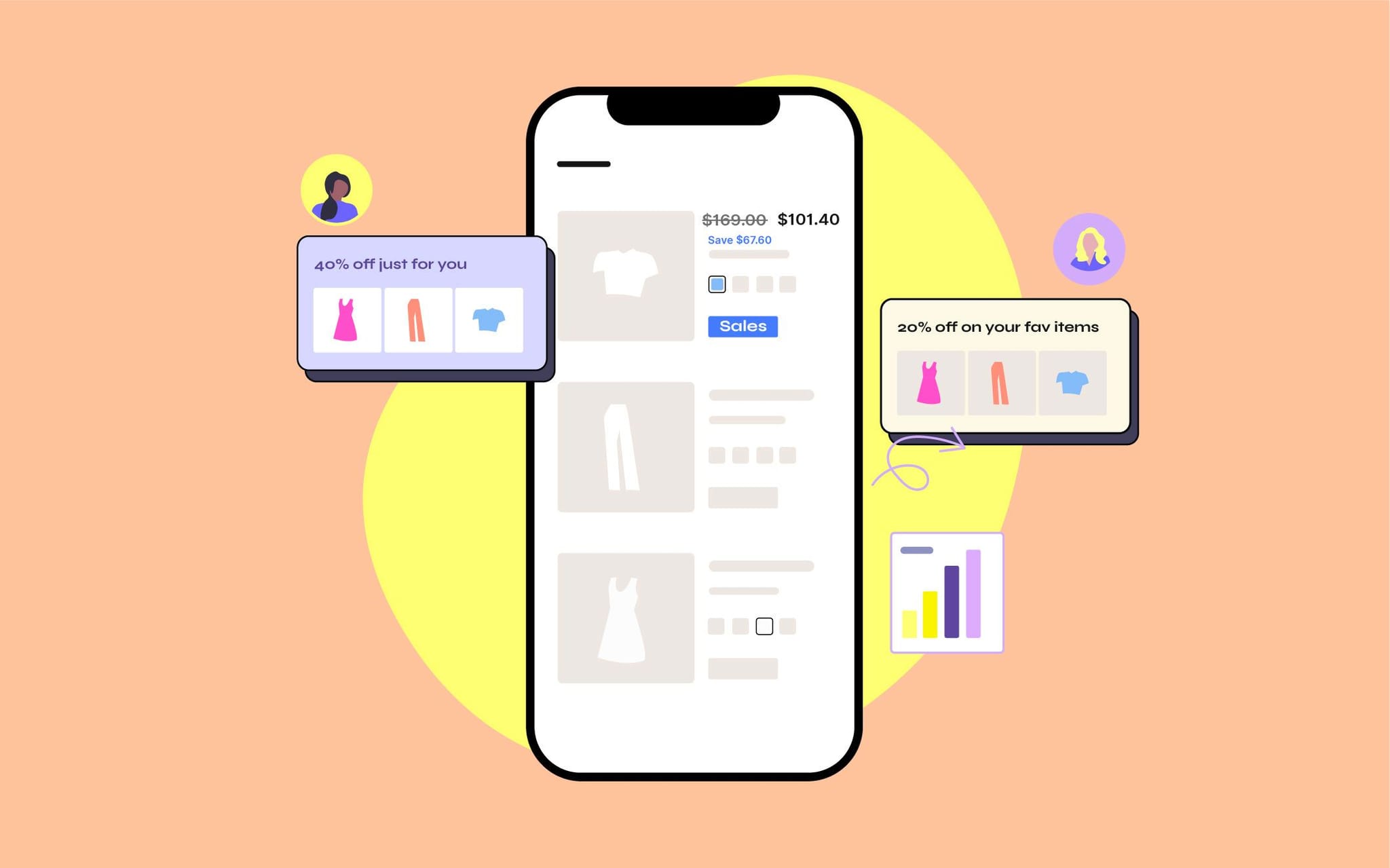
If you’re going to offer cash discounts, stop broadcasting them. The damage comes from giving discounts to people who would have paid full price. Narrow targeting protects your full-price buyers while still giving you a tool for acquisition and reactivation.
This means retiring site-wide promotional codes and homepage sale banners. Instead, send discounts only to specific audiences via email or SMS: lapsed customers who haven’t purchased in 6+ months, cart abandoners, first-time visitors who didn’t convert. Use unique, single-use codes tied to the recipient so the offer can’t leak to your full-price audience.
The key is channel discipline. Discounts sent via direct channels (email, SMS, retargeting ads) stay contained. Discounts displayed on-site or in social posts get shared, screenshot, and distributed to people who didn’t need the incentive. If a customer is already on your product page ready to buy, don’t show them a discount. If they abandoned their cart or haven’t returned in months, that’s when the offer goes out.
Narrow targeting also gives you attribution clarity. When every offer uses a unique code, you know exactly which customers are discount-dependent and which aren’t. That data becomes the foundation for further refinement.
Pulling the Plug on Discounts
With your alternative toolkit in place, you can begin the transition. This is not about flipping a switch overnight; it’s about systematically replacing blanket discounting with targeted offers and alternative mechanisms that protect margin while maintaining revenue.
Measure the Problem
Before you change anything, you need to understand how deeply discounting has penetrated your business model. Pull 12 months of order data and calculate three metrics:
- Discount penetration rate: What percentage of total orders used a discount code? This tells you how normalized discounting has become in your customer experience.
- Revenue at risk: What percentage of total revenue came from discounted orders? If the majority of your revenue required a promotional code to convert, you have a structural dependency problem.
- Average discount depth: Across all discounted orders, what was the average percentage off? A brand running 15% average discounts has a different problem than one running 35% average discounts.
These three numbers determine your transition timeline. Brands with 70%+ discount penetration and deep average discounts typically need 12 to 18 months to fully recover pricing power without cratering revenue. Brands under 40% penetration can move faster, sometimes within a single quarter. The key is matching your pace to your dependency level.
Execute the Transition
The transition is conceptually simple: stop giving discounts to people who don’t need them, and change what you give to people who do. In practice, this means progressively applying your three strategies (narrow targeting, ecosystem lock-in, and value-adds) to replace blanket promotions.
Here’s what that looks like over a typical quarter:
- Audit your promo calendar. List every discount you’re running: site-wide sales, email blasts with promo codes, homepage banners, cart abandonment offers, welcome discounts. Calculate how much revenue each one drives. This is your baseline.
- Start tightening the screws. Remove discount messaging from your homepage. Retire one site-wide sale and replace it with targeted offers sent only to lapsed customers via email using unique codes. Swap percentage-off codes in your cart abandonment flow for store credit. Test early access against cash discounts for engaged customers.
- Measure the impact and iterate. If revenue drops too much, you moved too fast. Stabilize and try a smaller change. If revenue holds or margins improve without significant volume loss, continue tightening.
Over time, your promotional architecture shifts. Lapsed customers get aggressive win-back offers via email, but never on-site. Cart abandoners get store credit, not percentage-off codes. Loyal customers get early access and exclusive products. New visitors see full price with strong brand storytelling.
As this happens, expect revenue to stay flat or dip slightly in the short term. You’re replacing low-quality volume with full-price purchases, and that’s a slower build. But the composition of that revenue changes fundamentally: gross margin dollars grow because you’re no longer giving away significant percentages of every other transaction, and customer quality improves as your file tilts toward buyers who don’t need a coupon to convert.
What It Looks Like on the Other Side
Eighteen months into a disciplined transition, the business looks fundamentally different. Discount penetration drops from 70% to under 30%. Gross margin per order increases by 15 to 20 percentage points. Customer cohorts acquired at full price show 2x to 3x higher LTV than legacy discount cohorts.
But the hardest part isn’t the tactics. The hardest part is the internal conversation. Finance sees short-term revenue risk. Marketing sees CAC spike as you stop subsidizing acquisition with margin-destroying discounts. The executive team has to hold the line while the business rebalances.
Need help planning and building the infrastructure to execute this transition? We can help!