
Case study
Off the Rack: Moving Good American from Hydrogen to Liquid
Good American in numbers
- −46%mobile load time
- −58%server response time
- 88%of mobile visits load in under 2.5s
Founded by Khloé Kardashian and Emma Grede in 2016, Good American has become one of the best-known names in American denim, now dressing its customers in everything from jeans to dresses and outerwear.
The Good American store ran headless on Hydrogen, which put the brand at a disadvantage: anything another merchant could simply install, Good American had to build. Without the Theme Editor, changing a piece of content meant booking developer time. Without Shopify apps, every integration was a custom project. Engineering hours went to maintenance and basic functionality instead of the work that sets the brand apart.
So Good American decided to move off Hydrogen and onto Liquid. The goal was a store their own team could run day to day, without booking a developer for every change. But the move had to be invisible: no redesign, no maintenance window, and no loss of functionality. We accepted the challenge.
industry
services
platform
timeline
“Hydrogen did what we needed for a while. But we kept hitting the same wall: things other brands got out of the box, we had to build for ourselves. We were spending engineering time to stand still, and we wanted that time back.”
Romina ChuaticoDirector of Digital Product @ Good American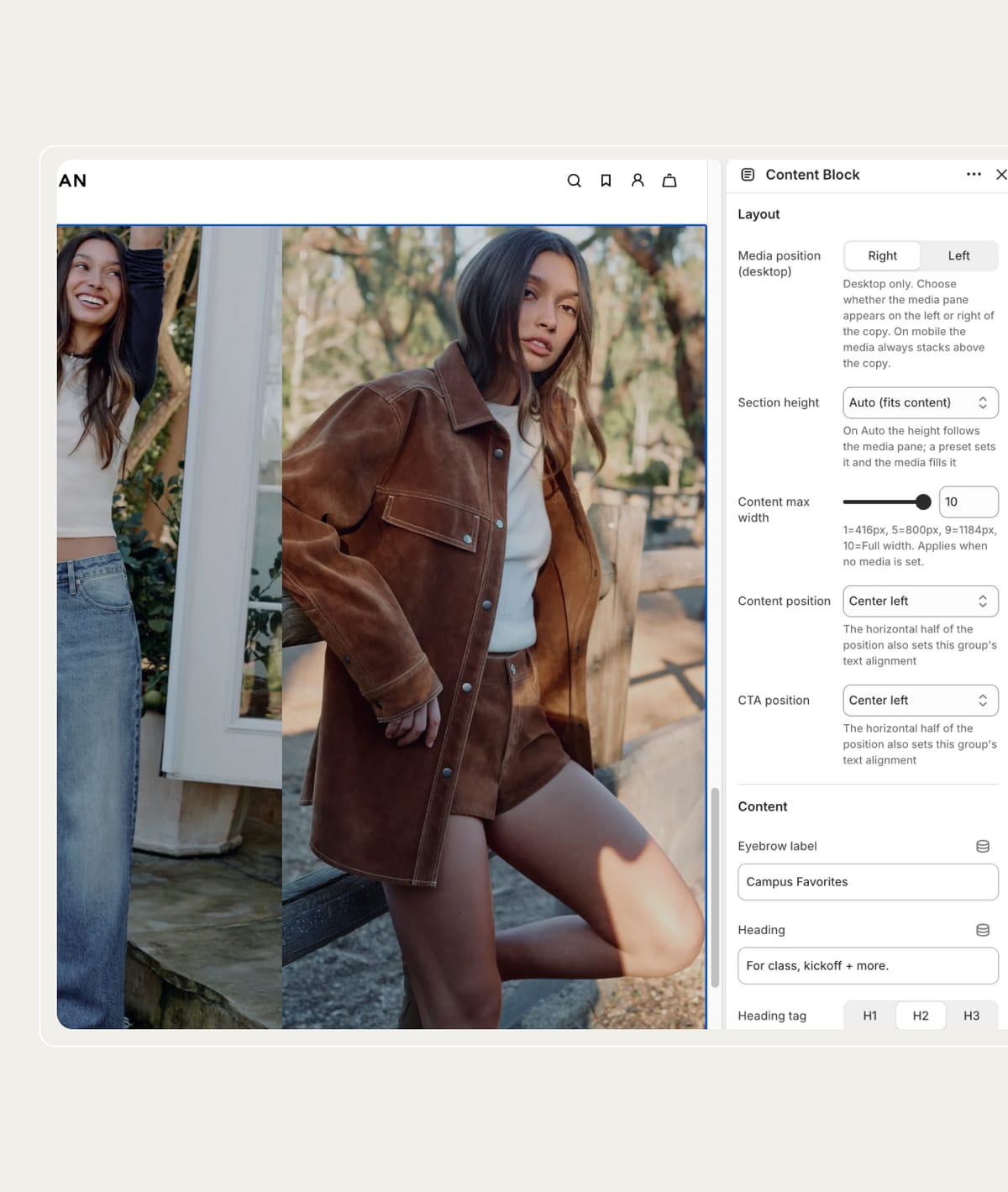
A storefront cut to marketing’s measure.
Good American’s editorial content sat in a separate CMS—one more system to maintain alongside an already complex Hydrogen storefront. Routine edits needed developer time, so marketing queued behind the roadmap. And because those pages lived outside Shopify, every app integration required bespoke development, while localization ran on custom code that was never finished—just as South America moved up the list of priorities.
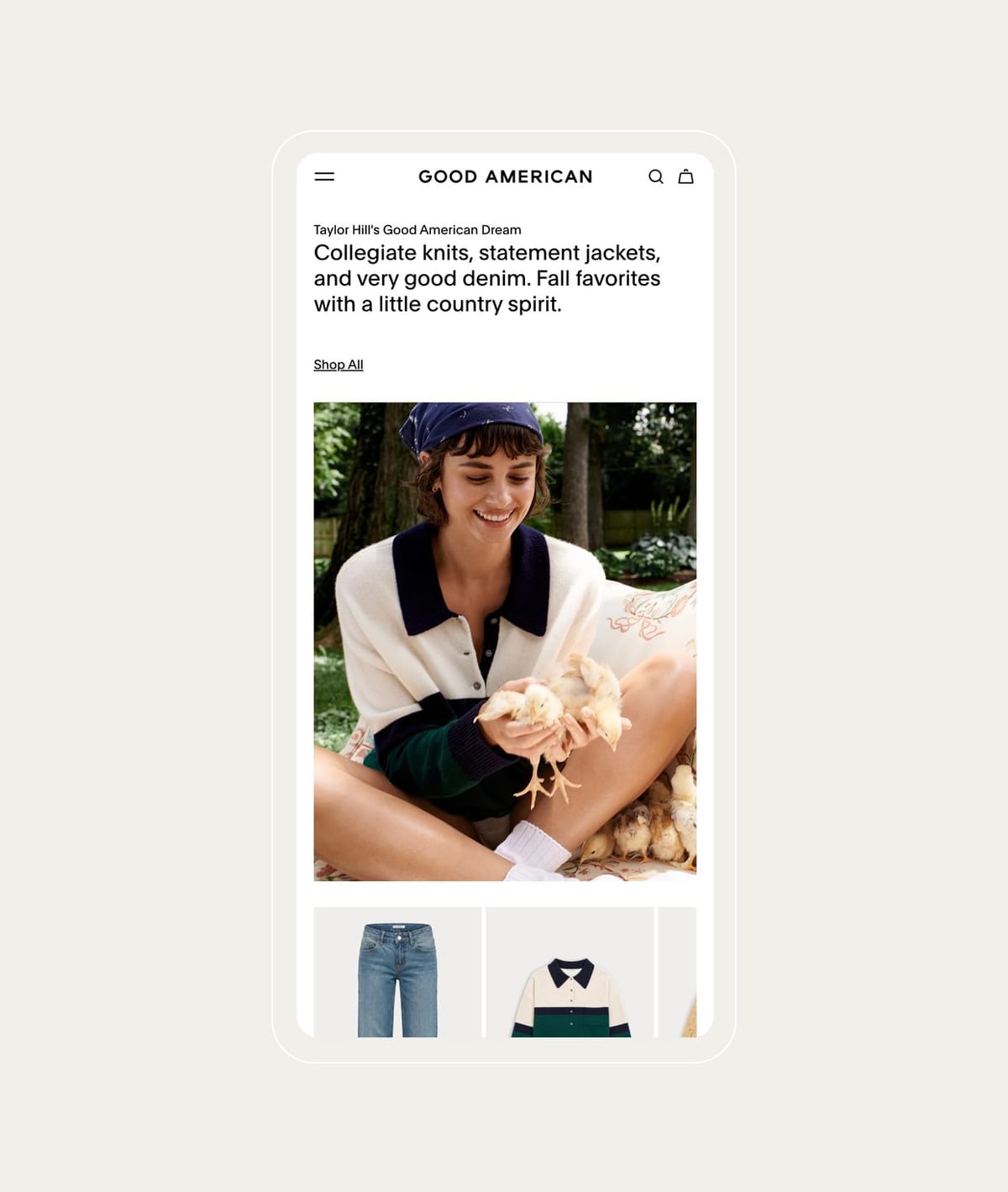
We removed the external CMS entirely and rebuilt the storefront on Shopify’s own primitives, matching the existing design pixel for pixel. Nothing on the surface changed, but underneath, the team got finer control than it ever had—a rich UI system of templates, sections, and blocks it can mix and match in the Theme Editor, as well as full support for Shopify’s entire app ecosystem and theme localization.
Now, marketing no longer waits on engineering to change the storefront, and engineering is no longer maintaining a CMS. Thanks to the new setup, Good American was able to launch the Mexican market with full content and price localization in record time, and they redirected the engineering hours that went into CMS maintenance to more interesting and impactful work.
The cheapest way to end debates.
A/B testing is how most teams settle a storefront argument. On Hydrogen, every test meant a developer building both variants by hand and wiring up the traffic split, so an experiment had to be worth pulling that developer off the roadmap. Only the big bets were. Because of that, nobody asked where the reviews should sit or which model image should lead a collection card.
To fix that, we brought in Shoplift, the Shopify-native testing platform we partner with. It duplicates a live theme template, lets the team change the variant in the Theme Editor, and splits traffic between the two, with segmentation by device, geography, and channel. We onboarded Good American during the replatform, so experimentation was live the day the store cut over.
Good American’s e-commerce team can now duplicate a template, change the one thing they’re curious about, and point a slice of traffic at it without booking a developer. The loudest opinion no longer wins. The data does.
Good old on the surface, brand-new underneath.
The timeline was tight, which made a like-for-like port tempting. Lift every app and integration across as-is, and nothing breaks in the move. The catch is what lands on the other side: a new storefront already carrying apps nobody uses and integrations nobody remembers wiring up, sitting there for another five years.
So we cleaned house on the way over, retiring unused apps and simplifying integrations instead of porting them intact. Searchspring moved to client-side rendering through its JavaScript SDK, analytics onto Shopify’s Web Pixels API, color swatches onto metaobjects. Not one of those swaps changed what a shopper saw.
Three engineers did the work, the storefront never went down, and launch day was boring, which was the point. A shopper who ordered jeans on Friday came back on Monday to the same store, running on templates, integrations, and a data model we had rebuilt from scratch.

“Halfway through the build, I noticed I was worried about not being worried. A move this size is supposed to hurt at least a little, but Nebulab had it under control the whole way.”
Romina ChuaticoDirector of Digital Product @ Good American