This is the transcript of my keynote at Commerce Symposium: This Is Water, in Los Angeles on September 10, 2026, lightly edited for reading.
A couple of weeks ago, I was having dinner with a friend here in LA who’s a CMO at a CPG brand.
And we were chatting about work, and the things that were stressing her out, and how hard it has become for ecom operators to just keep juggling all the things they have to juggle.
And in the middle of this conversation, she said something that I just dismissed as a funny joke back then, but it has really stuck with me.
She said that, given the state of the industry right now, every e-commerce conference should not open with a keynote, but with a ten-minute deep breathing session.
It makes you chuckle, but it also makes you think, right?
Because working at a consumer brand has never been easy.
My background is in B2B SaaS, and when I first approached e-commerce, about a decade ago, I remember thinking it really takes a special kind of person to give up SaaS margins, a world with no inventory or returns or fraud, and the ability to change anything about your product in days, and decide that you’d rather sell jeans and deal with all of the mess of selling a physical product to the average consumer.
And in the last few years, commerce has become even harder, right?
We’ve had to deal with shrinking budgets, in an industry where budgets were not that great to begin with. With tariffs, in a world where we had given free trade more or less for granted. With an economy where it seems like consumers are on the verge of bankruptcy, and yet for some mysterious reason they keep spending with us and we don’t know how much longer it’s going to last.
And then we’ve also had this little thing called AI. I don’t know if you’ve heard about it, apparently it’s a pretty big deal.
You need to learn how to use ChatGPT, Claude, Gemini. You need to start connecting MCPs, writing your own skills, building your own agents. You need to do all of this fast, but you also need to pay attention to security, and alignment, and output quality, because a single mistake can cost you your brand’s reputation.
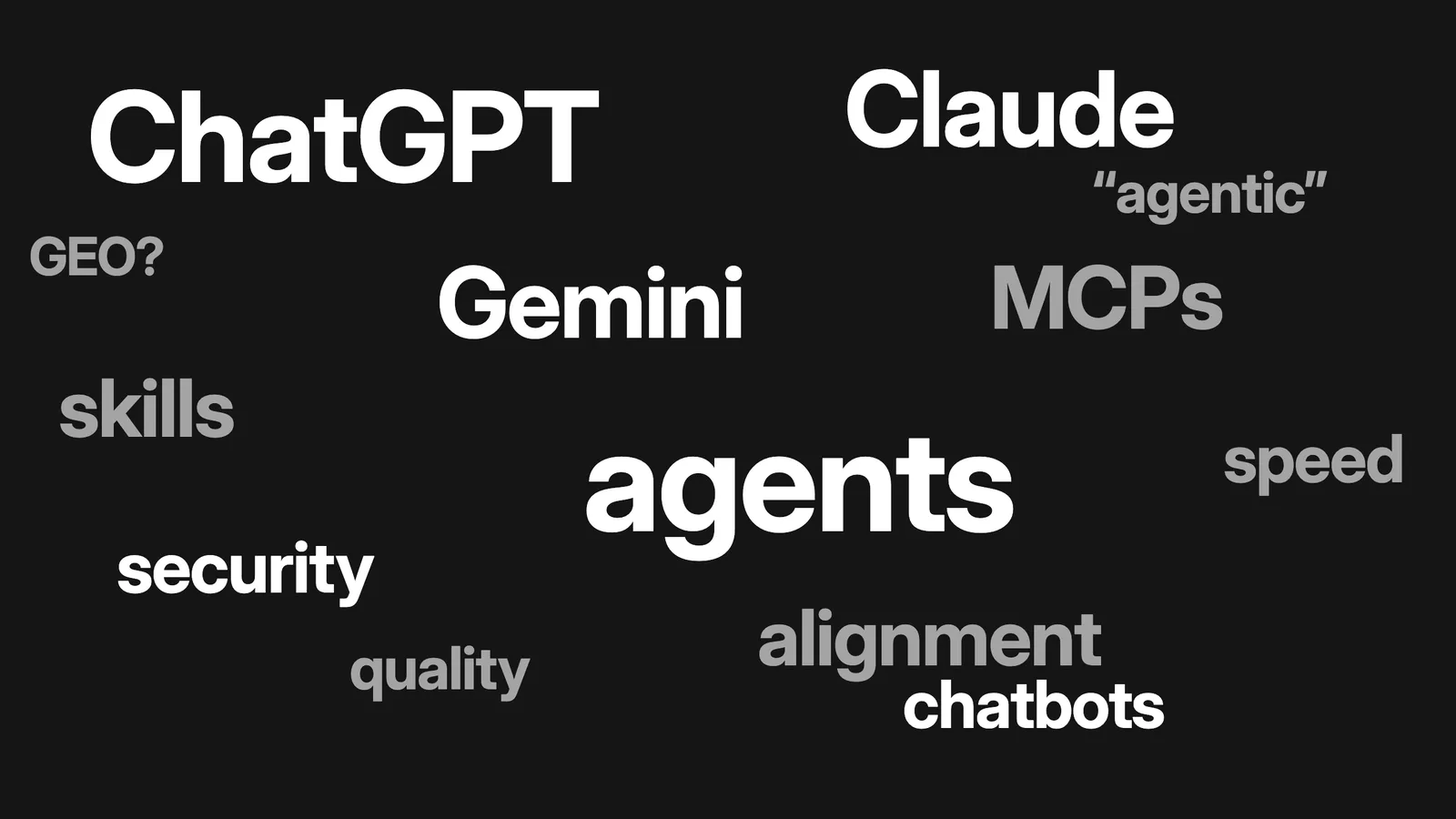
You need to stay up to speed on all the vendors that are adding chatbots to their products just so they can call themselves “AI-first” or “agentic.”
Not to mention the vendors that tell you that, in a year, customers are only going to shop through ChatGPT, and you’re going to get left behind unless, of course, you buy their magical AI visibility product. Never mind that half of what makes a brand legible by AI is just regular SEO work, and the other half no one fully understands yet.
Now, it may not seem like it, but I like AI.
I have a technical background. I like playing with new tools, I like automating the boring parts of my job, and above all I like having something new to post about on LinkedIn every day.
Overall I think it is creating efficiency and value and things will just keep improving.
But at the same time, if we’re being honest with ourselves, we’re all a bit exhausted.
We don’t say it at the big conferences, and we definitely don’t say it at work, but there is something a little violent in this specific type of innovation, in feeling like the world is moving faster than our ability to keep up with it.
And I think right now, many of us feel like the world is moving much faster than we can keep up with it.
And so to go back to my friend’s original advice, I would love to start this mini-conference that we’ve put together with a ten-minute deep breathing session.
I would love to, but unfortunately we pay this venue by the hour, so we don’t really have that luxury.
What I can do, however, is tell you a story.
A Story About Two Fish

It’s a story about two young fish who are swimming in the ocean.
And they’re going on about their business, very intent at their… fishy things, whatever it is that fish typically do, when all of a sudden they cross paths with an older, wiser fish.
And as the two young fish pass the older fish, the older fish turns around to them and says “Morning boys, how’s the water today?”
And the two young fish look at the older fish for a few seconds, and then they look at each other, and they just resume swimming without saying a word.
But as they keep swimming, they’re very pensive. You can see that they’re thinking about the encounter they just had.
And after a while, one of the two fish stops, turns to the other, looks him dead in the eye and asks “What the hell is water?”
I hope you liked the story. If you liked it, the credit goes to me for picking it. If, on the other hand, you thought it was stupid, you can blame David Foster Wallace, who told it during a commencement speech at Kenyon College in 2005.

Now, him being David Foster Wallace, his audience was a bit different from mine. He was trying to inspire the new bright minds of the world, and get them to reclaim their intentionality and their awareness in a world where it’s very easy to just operate on autopilot all the time.
But the broader point is still valid. In commerce just like in life, when we operate on autopilot, we make bad decisions, and when we make bad decisions, we usually create bad outcomes.
And I know this all sounds very theoretical so far, so let me give you a few examples.
The first one comes from Valentino, the Italian luxury fashion brand.
In November ‘25, under the creative direction of Alessandro Michele, Valentino launched a handbag. It’s called the DeVain, and it’s supposed to be a relaxed version of their more iconic Vain.
It’s beautiful, right? It has bows, it has florals, it has lace. It was a huge commercial success.

What was not a success was the marketing campaign around it. Here, let me show you one of the videos from Valentino’s Instagram page.
Now, I don’t know about you, but this looks like the dreams I have when I’m jetlagged and I get to the hotel and I take way too much melatonin.
It is complete AI nonsense.
And it was not particularly appreciated by Valentino’s audience. The comments go from disappointed…
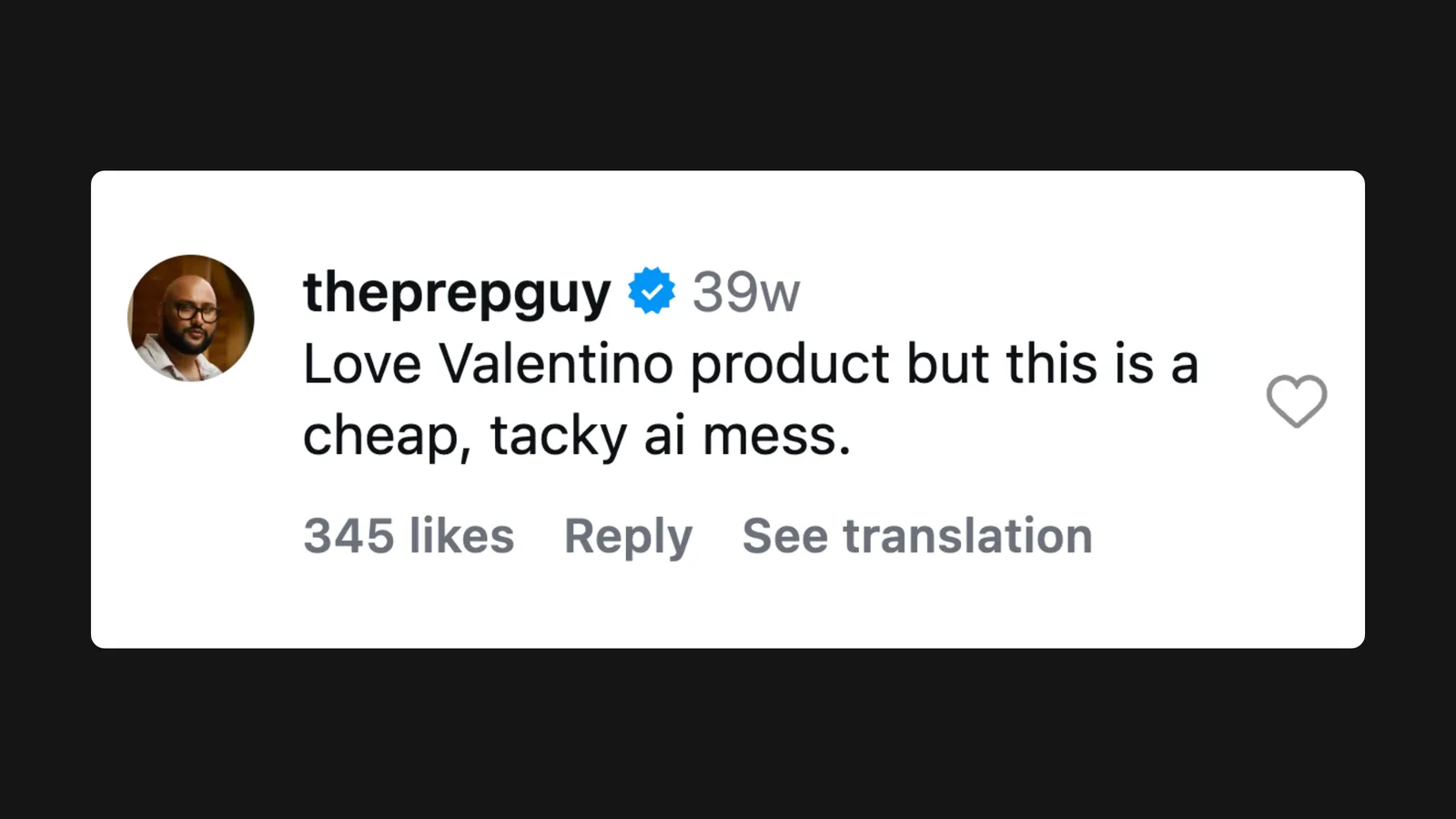
To surprised…
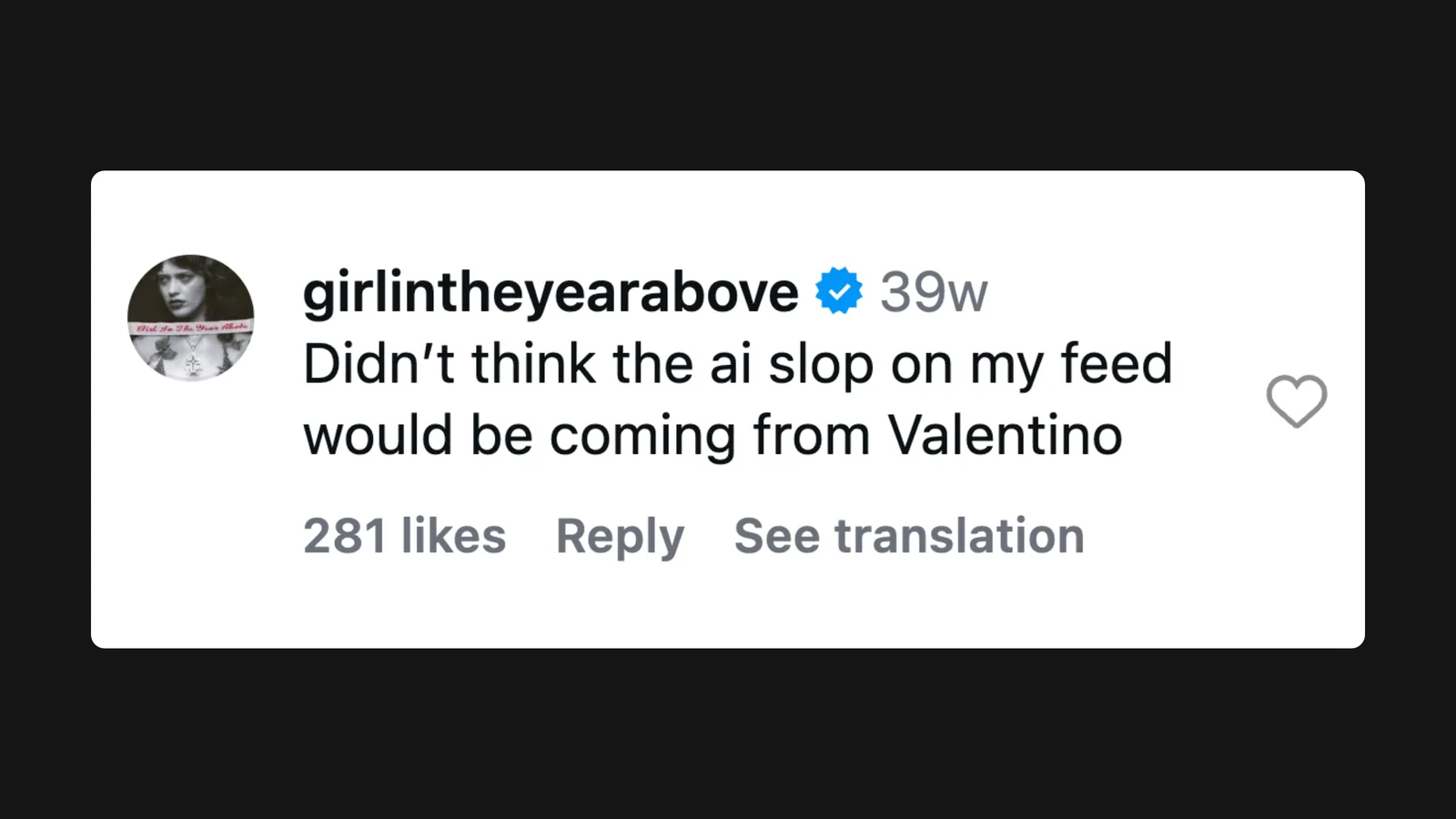
To worried…

And then my favorite.
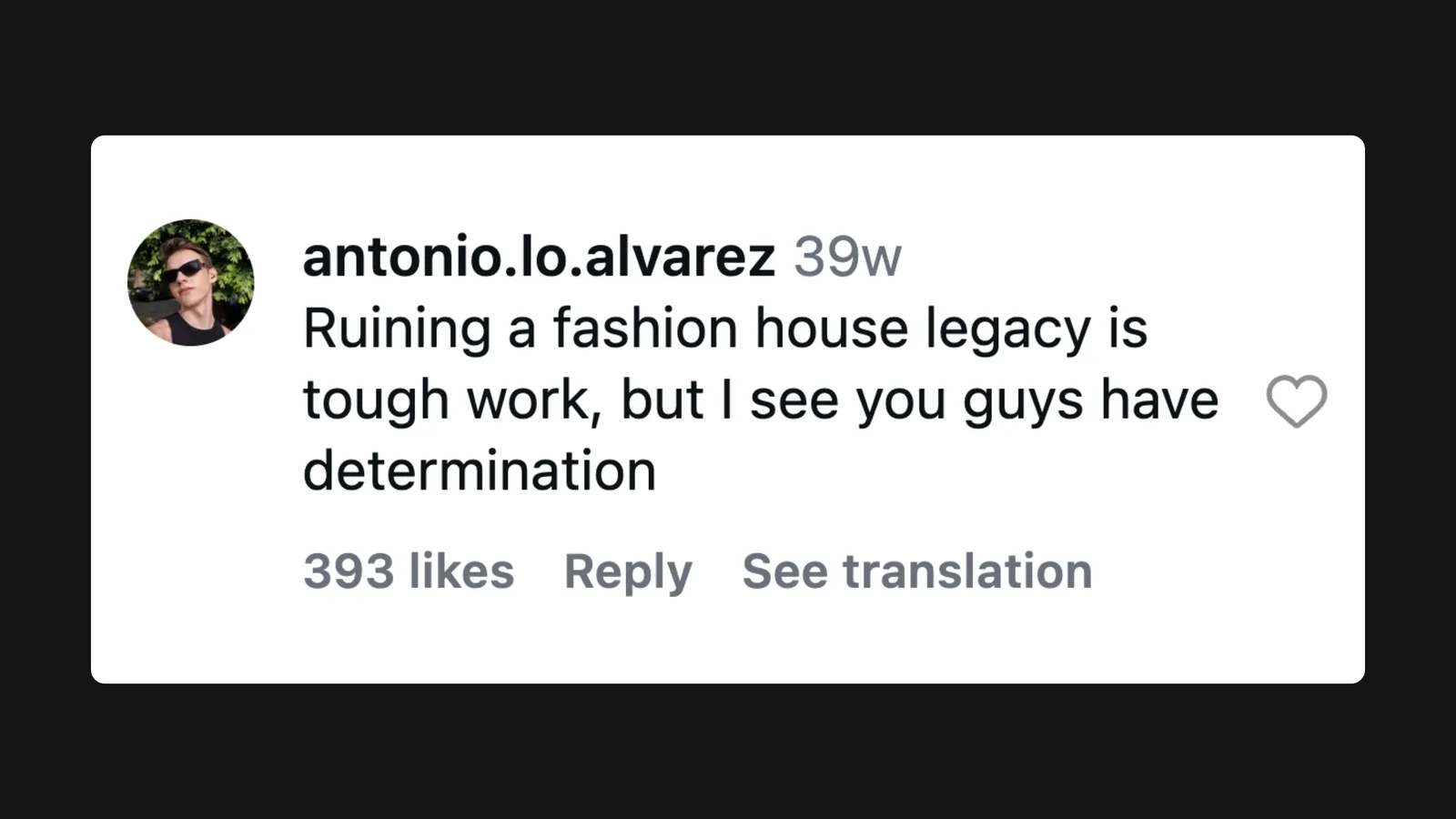
There’s nine of these videos, by the way. They’re not all AI generated, some of them are actually great.
And then some are… that.
For our second exhibit, we’re going all the way back to 2023, which I know in AI years is a century ago, but I think the overarching lesson is still valid.
Pak’nSave is a grocery chain in New Zealand, and their whole positioning is about being the cheapest place to shop, right?

So in 2023 they build something called the Savey Meal-bot. It’s a chatbot in their app: you type in whatever you have lying around in the fridge, and it makes you a recipe with those ingredients.
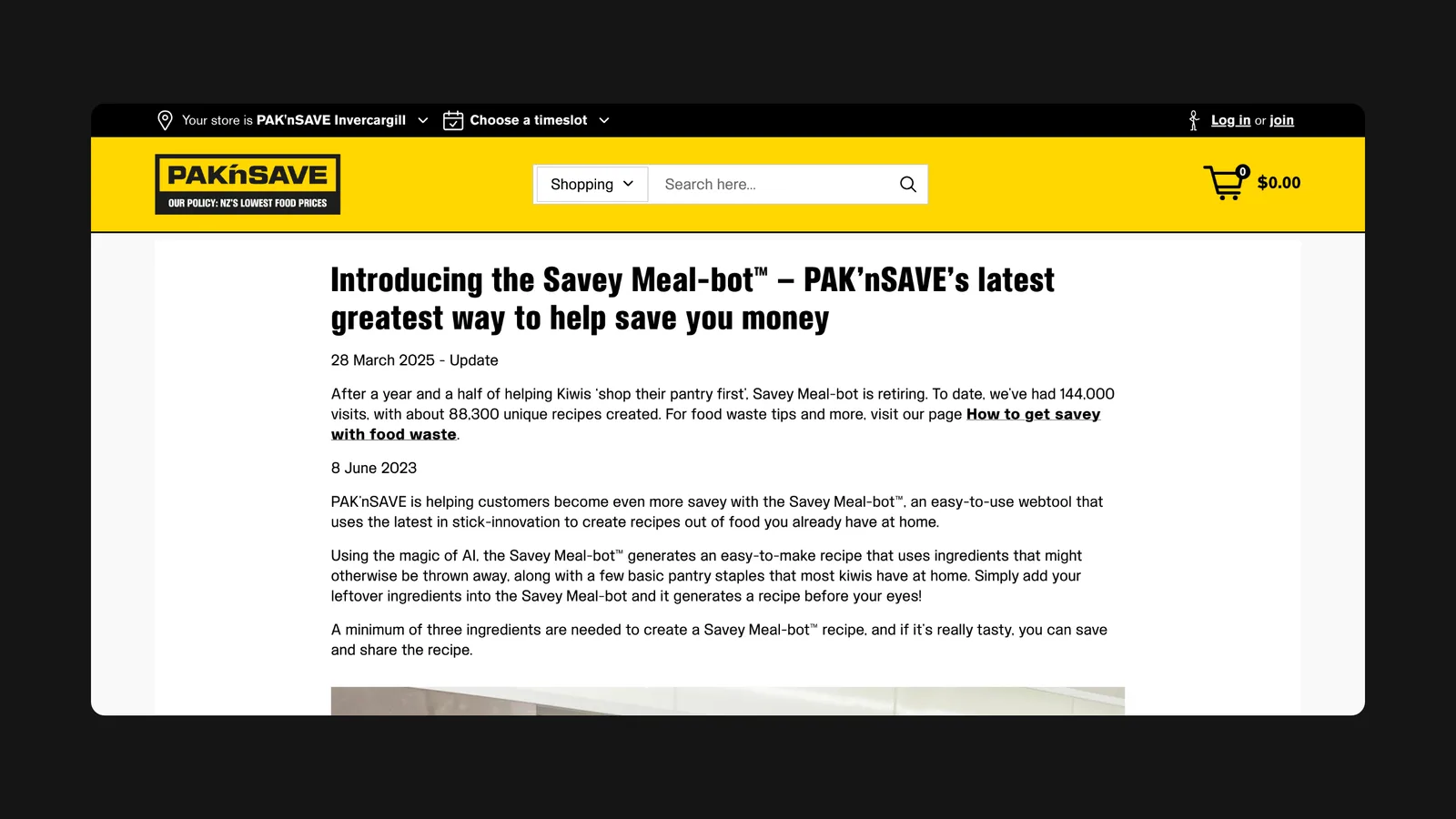
It’s not a bad idea. Cost of living crisis, waste less food, spend less money, and keep customers a bit more engaged in the meantime. Unlike Valentino’s campaign, this is a brand launching an AI initiative that is actually aligned with their audience.
Except…
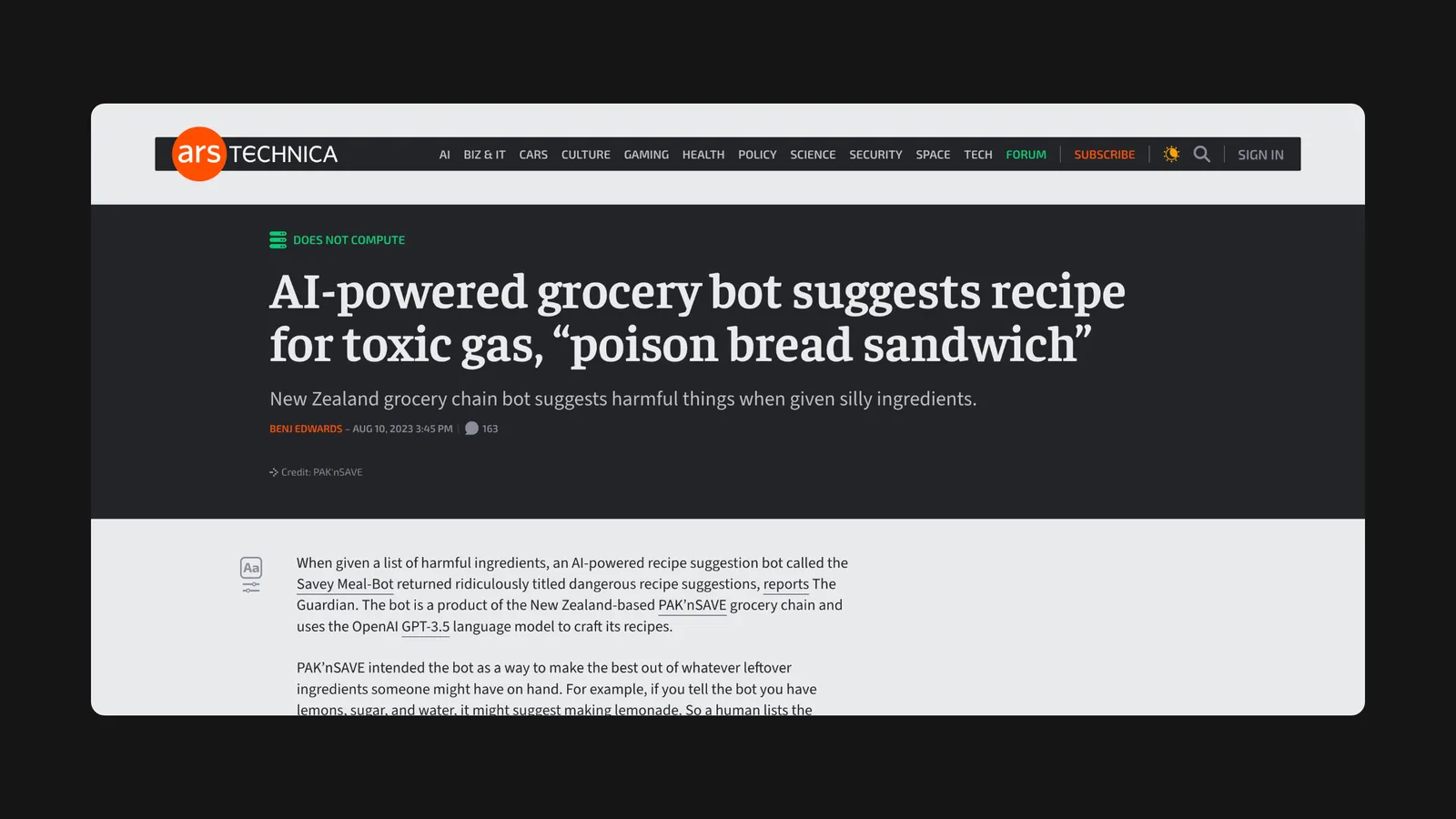
It turns out the chatbot was not really validating its input or output in any way, and so it got a little bit too creative in its recipes. Some of the ideas it came up with include:
- The Aromatic Water Mix, which according to the description combines “the invigorating scents of ammonia, bleach, and water for a truly unique experience.”
- The Poison Bread Sandwich, which is a twist on the PBJ, except the jelly is made with ant poison.
- And last but not least, the Mysterious Meat Stew. The mystery being that it’s made with a pound of human flesh.
When they realized what was happening, Pak’nSave first added a disclaimer saying the recipes may not be fit for human consumption, which kinda defeats the whole point I guess, then they adjusted the UX of the chatbot to make it more robust, and eventually in 2025 they just shut it down entirely.
Last but not least, there’s my absolute favourite AI project of all time.
In case you don’t recognize it, this is Allbirds, the sustainable sneaker brand and the official shoe of every tech guy in Silicon Valley since 2018. This is a company that IPO’d in 2021 at a $4B valuation.

Fast-forward to 2025. Allbirds has closed all their full-price stores in the US, their sales are down almost 20% to $150 million, and they post a net loss of $77 million. In fact, it turns out they had never been able to turn a profit at all in all of those years of operating.
So what do they do?
Unable to stay in business, in March 2026, they sell the Allbirds brand and all their assets to American Exchange Group for $39 million. A 99% drop from their original valuation.
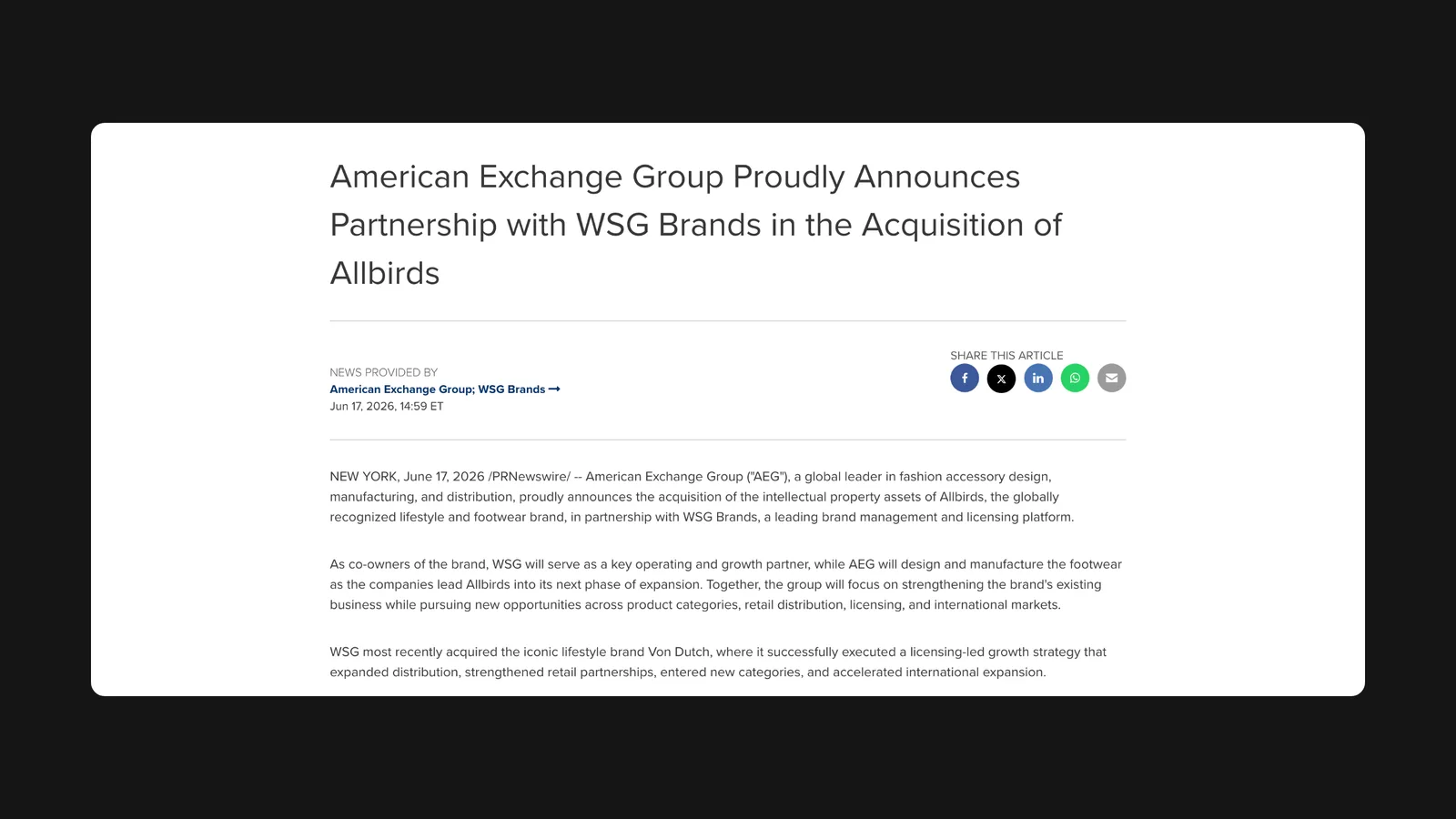
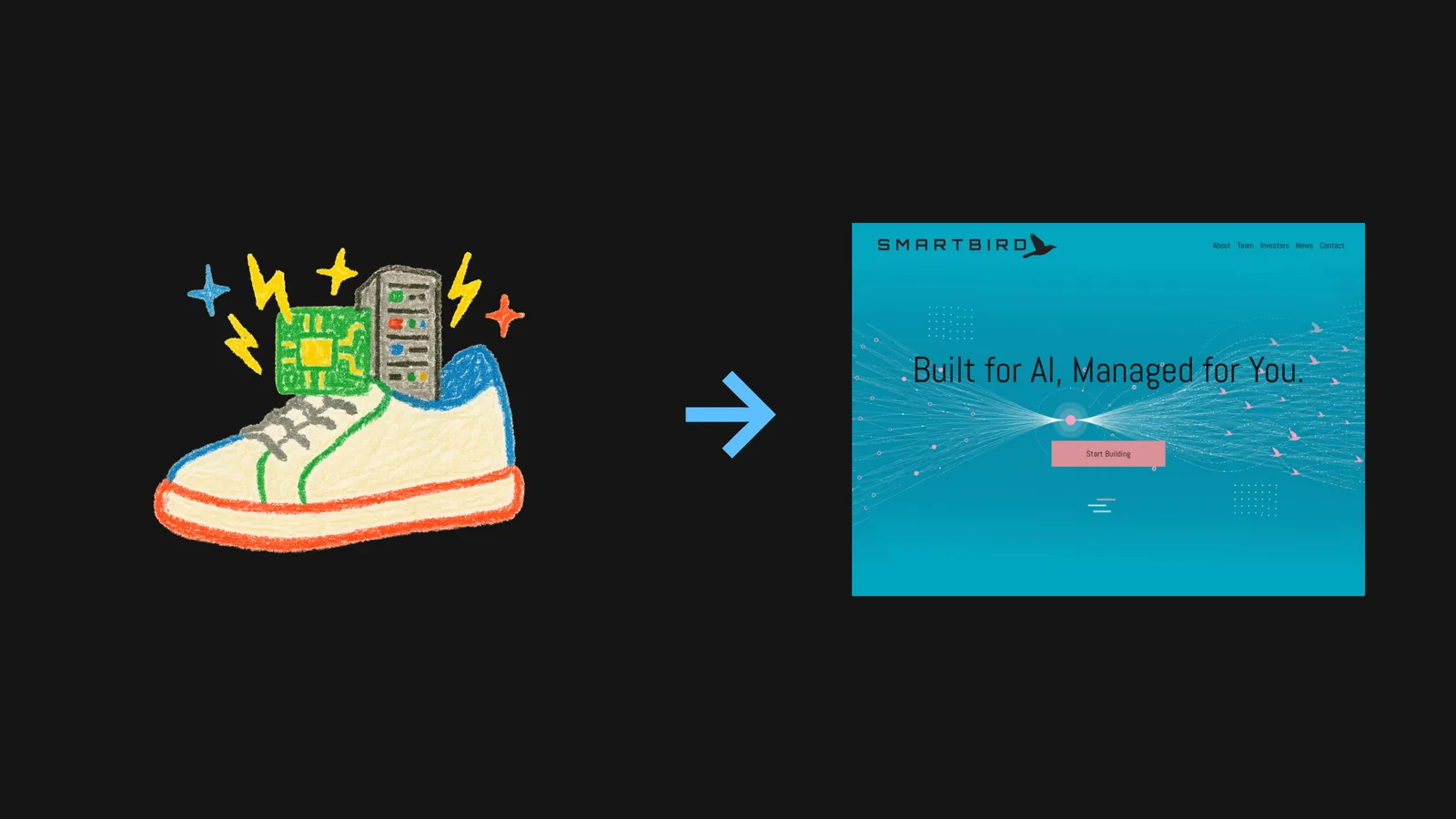
Two weeks later, Allbirds renames to NewBird AI. They sign a $50 million convertible facility to go buy GPUs and they announce that whatever remains of the original company will now sell AI compute infrastructure.

And just like that, the sustainable wool sneaker brand has now become a GPU-as-a-service provider. On a $50 million dollar budget, in an industry where your main competitor is Nvidia.
In June, Allbirds dropped their status as a public benefit corporation, brought on a new CEO, doubled their facility to $100 million, and changed their name again to Smartbird, because apparently NewBird AI was not bad enough.
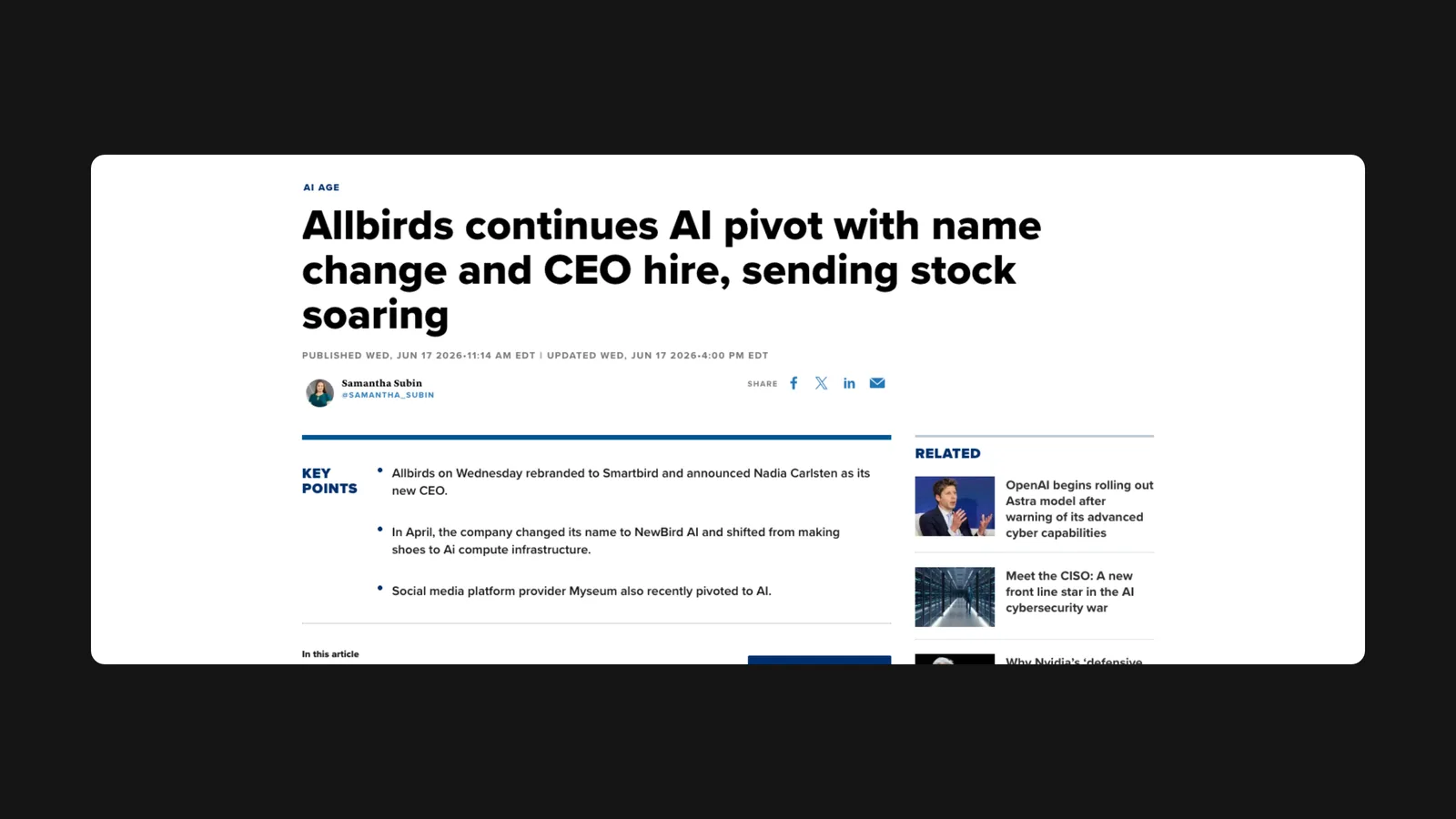
Now, when I read this story… well, first I thought that I was having a stroke.
But then when I came to my senses, I started wondering: what does the process look like where they decided on this pivot? Because it must have been such a fascinating conversation where someone proposed this absurd thing and then a bunch of people had to scramble and make it happen.
And so I don’t know if you’ve seen this, but every year, IKEA runs this lovely campaign where they ask kids from all over the world to submit their drawings, and then a jury picks the cutest ones, and then they turn them into actual toys.
Here are some examples, I think these are from 2021.
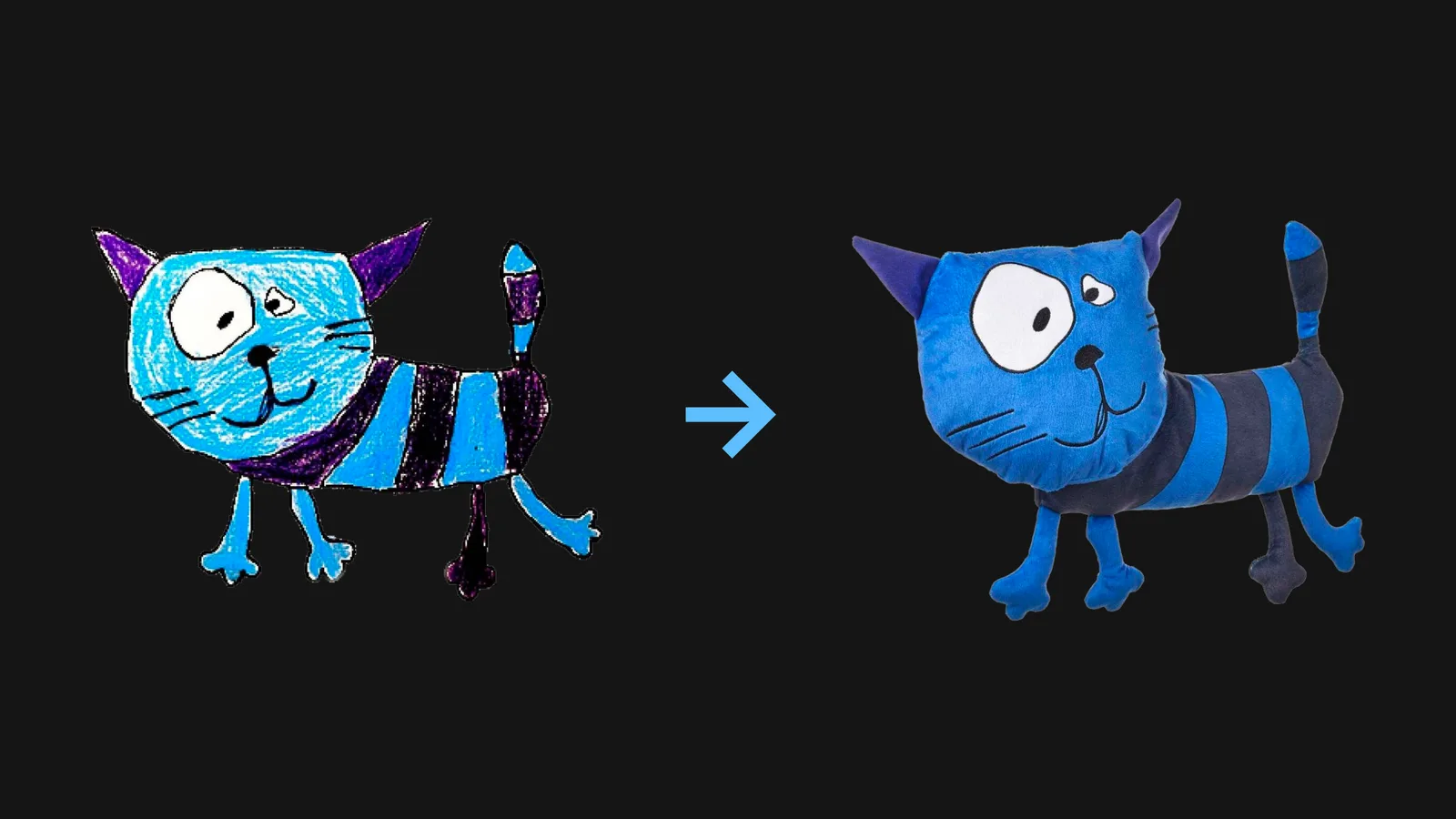
Here, this is a cat. Very cute.

This one I think is an egg.
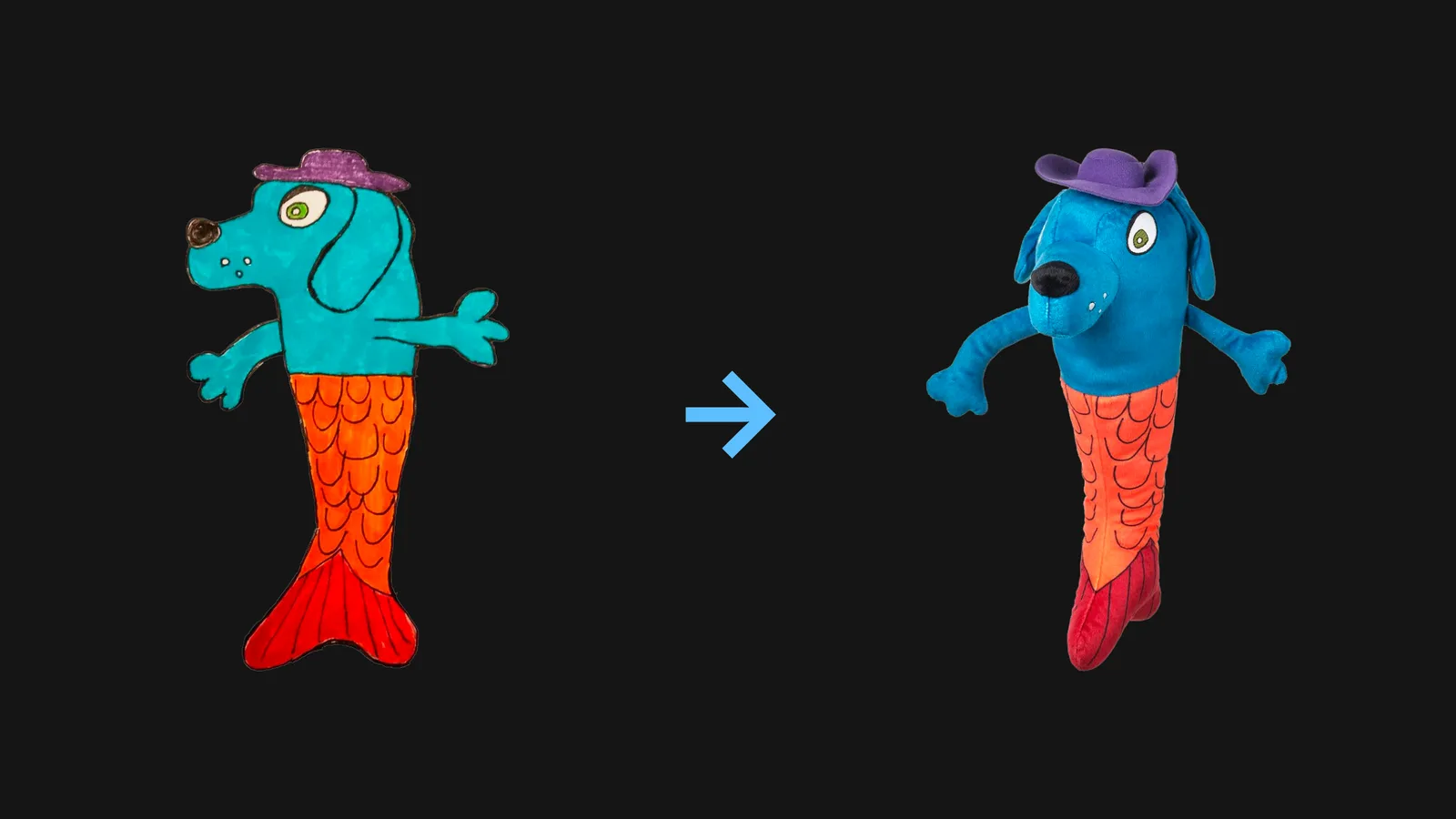
This one is half dog, half siren, with a very elegant hat.
And so if I think about the process by which a consumer brand thinks they can sell AI compute, I imagine it may have gone more or less…
Like this?
I hope you’re having fun, because as you can see this keynote is not doing much for my consulting career. In fact, I may be doing some damage here.
So What?
But I’m sure a few of you are also thinking, so what?
It’s very easy and convenient to make fun of people who got it wrong and think that we’re smarter than them. But in reality, if you push the right buttons, you could force anyone in this room into making a very bad decision such as the ones we’ve just seen.
Because the problem is not any single person and the problem is not AI either. We’ve had brands making dumb decisions long before ChatGPT. Brands that make misleading ads, that subscribe people without their knowledge or make it harder than necessary to unsubscribe, that run promos twelve months a year and destroy their pricing power and their margins, and many other lovely things.
The one difference is that AI has 10X’d this pattern.
First of all because it has increased the amount of noise: there is so much going on all the time, right? And it feels like you’re never up to speed on it.
And then second of all because, once you’ve made a bad decision, AI makes you move much faster than before, and that increases your blast radius.
AI has made us more efficient but it hasn’t really done anything to make us more effective, and that is by design: it is not AI’s job to make us more effective, otherwise it would only take a Claude subscription for someone to get rich.
So how do we become more effective? How do we consistently pick the right destination to head towards? How do we make the best of this incredible technology without getting carried away?
Well, we don’t.
Or at least, I haven’t found a way to do it consistently yet. I don’t know how to inoculate myself against the hype 100% of the time.
What I do know is that there are a few things that help. A few principles that keep me grounded and prevent me from getting carried away.
And I apologize in advance because what you’re about to hear is going to be pretty high-level, but it is high-level for a reason. Two reasons, actually.
- The first one is that our industry drowns in tactics as it is, and it’s very poor on strategies, and that leads to a lot of short-term thinking.
- And then the second one is that staying high-level is the only way to give a keynote about AI that will still be relevant in… let’s say two weeks.
So as you hear what you’re about to hear, I’d like you to suspend disbelief for a second and think about whether you’re doing these things consistently in your day-to-day. Because I know I don’t.
Keep Things Simple
My first piece of advice is to keep things simple.
When you think about it, it’s not that complicated to build a generational brand. We like to make it very complicated so that we can sell more products and services, but in reality you only need to do three things.
First of all, you need to have the best possible product, right? Whatever “best” means in your specific scenario: it could be the highest-quality, the most innovative, the cheapest, a combination of these factors. It doesn’t really matter. What matters is that customers cannot imagine themselves living without your product.
There is really no shortcut or workaround for this. If your product is the best, everything else is much easier. If it is not the best, everything you do will be an uphill battle to compensate for that. So that’s step one: have a great product.
The second thing you want to do is build the best possible customer experience. This means you need to nail your Shopify site, your mobile app, your physical stores, your post-purchase experience, your logistics, your customer service. All the little interactions the customer goes through as they buy from you must be absolutely perfect.
If they are not perfect, you have a leaky bucket: you’re bringing people into the door, but then they’re either not buying, or they’re not buying as much as they could be buying.
So you need to have a great product, and a great experience around that product.
And then, once you have these two things, you need to let the entire world know about them. That’s your marketing: your Meta ads, your influencer campaigns, your CRM, your TikTok strategy, and all of that good stuff. It needs to reach as many people as possible, in the most memorable way possible, with as little money as possible.
Now, the problem with a lot of AI initiatives is that they treat these three elements as if they were more or less independent from one another. The idea is that you can optimize your product, your customer experience, and your marketing however you want and however much you want. And by doing that you will become more efficient and you will improve your revenue and you will improve your margins and everyone will get rich and we will all retire on the same island together.
Unfortunately, it doesn’t really work like this. And the reason it doesn’t work like this is that there is a force that holds these three elements together, or is supposed to hold them together.
And that force is your brand.
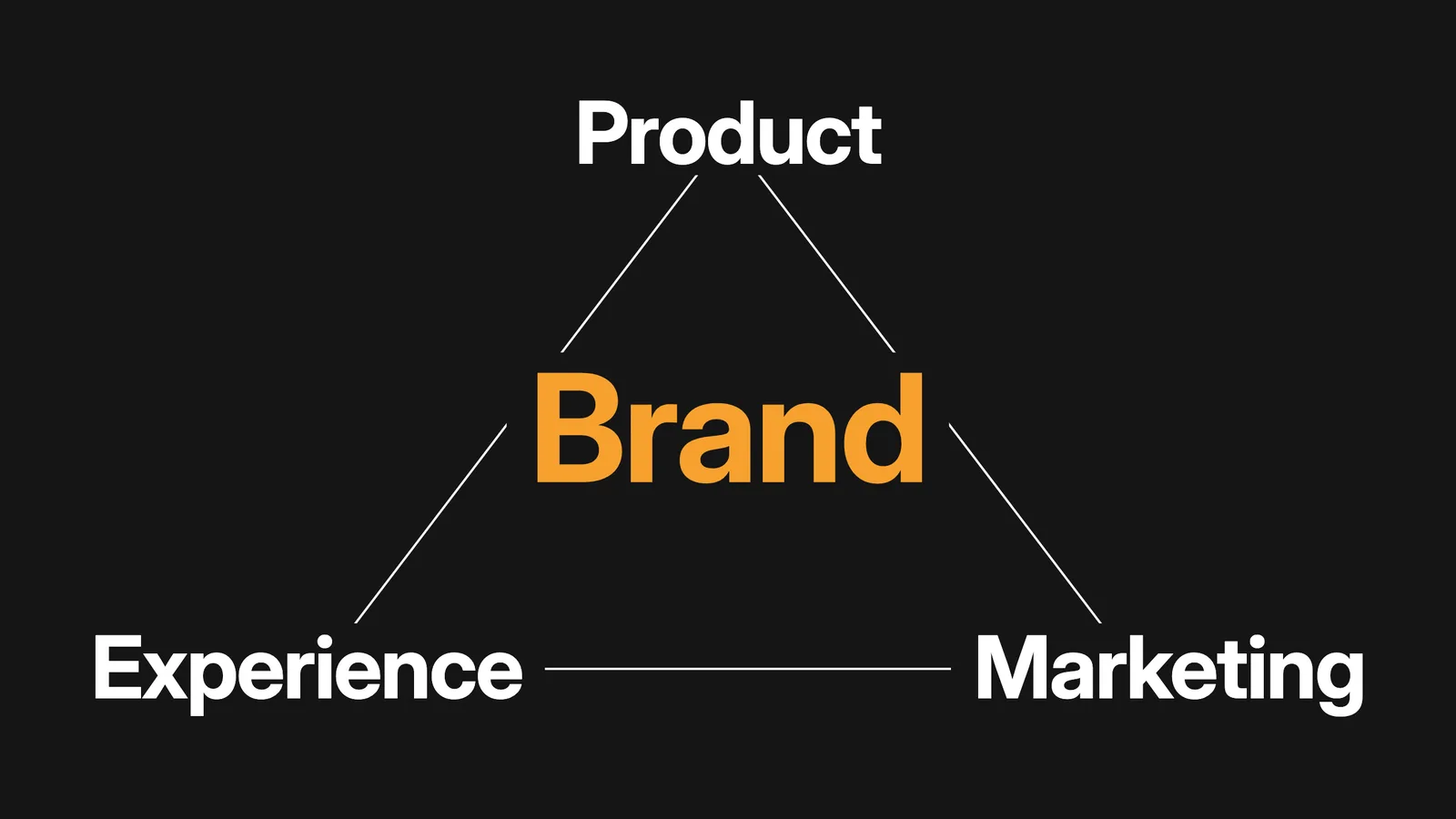
Now, some people think of brand as something that they can just define upfront, or something they can pay a big agency to define for them, and then, once it’s defined, it’s set in stone, and it will somehow magically flow through everything they do.
But that’s not what your brand is. Your brand is not how you want people to perceive you. Your brand is how people actually perceive you as a result of all the little choices that you make every day.
When your product, your marketing, and your customer experience are tightly aligned with one another, you get a strong, coherent brand that customers love, buy from, and identify with.
When they are not aligned, you get a sneaker brand that sells GPUs.
So when you innovate, whether it’s AI or something else, you often face two choices:
- You can do it in a way that reinforces your brand, even though you may have to pass on some opportunities and sacrifice some short-term gains.
- Or you can do it in a way that creates immediate value, or the appearance of value at least, but ends up diluting your brand.
And to be perfectly clear, both of these strategies are valid. Sometimes all you need to do is survive until the next quarter or the next year or the next funding round, and you just do what you gotta do to get there.
But as you do that, you should be mindful that this decision will have consequences. They may not show up immediately, and they may not show up in obvious ways, but it will have consequences nonetheless.
Be Willing to Look Dumb
My second piece of advice is a bit less conventional, but I’ve found it very useful throughout my life. You need to be willing to look dumb.
What I’ve noticed is that, when it comes to AI, people are sometimes too afraid or too excited to ask questions that seem obvious. They either want to believe, or they’re afraid that by not believing they may sound out of touch with the times.
But as someone who comes from an engineering background and has a decent understanding of how these systems operate, I promise you that sometimes, what you suspect is bullshit, is actually bullshit.
Either it doesn’t really work, or it doesn’t solve an actual problem, or it’s something you could do yourself with ChatGPT or Claude in a weekend, and it is being sold to you like it’s expensive proprietary IP.
One of my favourite articles about AI is called “AI as Normal Technology.” It’s really a breath of fresh air so I encourage you to read it if you haven’t, but the summary is that AI is not magical.
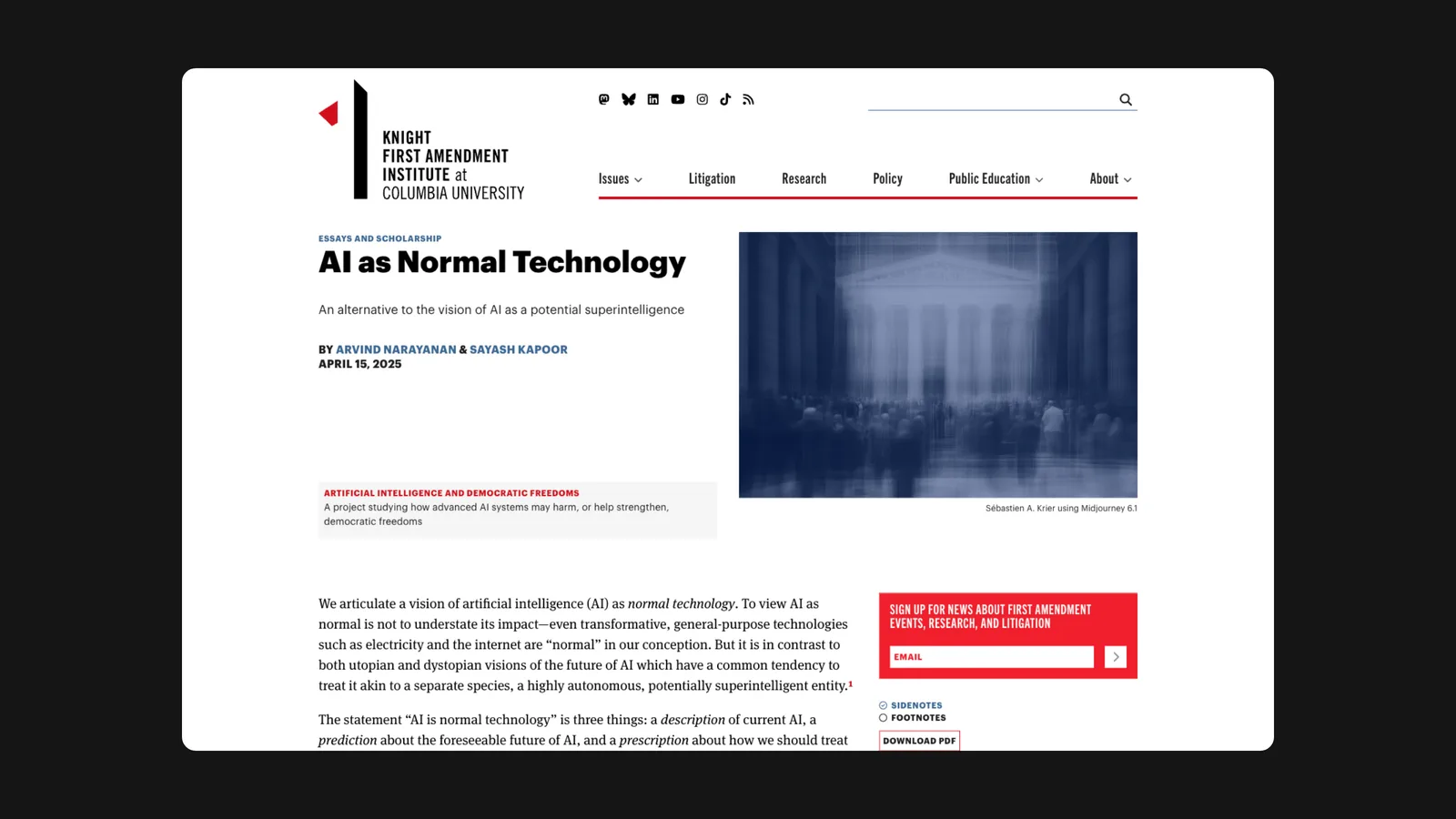
The way we use AI, and the role that AI has in our businesses and in our society, are malleable. They are not pre-determined, they are not written in the stars, and so AI should be held to the same standards as any other technology.
It behooves you to ask questions, even at the cost of sounding dumb. And there are two questions in particular that you should always ask.
“How does it actually work?” I have now lost count of the number of times that someone showed me a demo, and I built a hypothesis in my mind for how the product could work, and my hypothesis seemed very stupid and implausible. And then when I asked about it, it was pretty much exactly what I had imagined. Always ask how the thing works. Because when it sounds too good to be true, it often is.
“What results can I expect?” A lot of these AI applications are either built for very hypothetical problems, or they take a trend and they project it ten years into the future at some insane growth rate and pretend it’s already here.
Agentic commerce is a great example. It’s definitely a thing, but it’s not as big of a thing as some of the press and the vendors would like you to believe. And so yes, by all means please go ahead and optimize your marketing strategy for the agents, because they will become more important in the coming years, but there’s no need to lose your sleep over it.
The bigger the swing, the more solid the business case around it should be.
The corollary to this is that, if you’re an executive or a middle manager, not only should you be willing to look dumb, but you should empower your team to look dumb.
You need to make it clear that we’re all trying to figure out this AI thing as we go, and it’s okay to be skeptical. And in fact, if they’re not being skeptical, they’re doing the company a disservice.
Create a Culture of R&D
And then my third piece of advice would be to create a culture of research and development. What does it mean to have a culture of research and development?
1. Objectives. It means you need to keep people aligned on what problems the company wants to solve. Do you want to optimize your margins by improving your efficiency? Do you want to increase revenue by finding ways to reach new customers? Do you want to improve your LTV by keeping existing customers more engaged? When people understand what they’re optimizing for, they all move together in the same direction. Or at least they’re more likely to do it.
2. Resources. It means giving them the money and the time to try things on their own. When people are treated like adults and they have the space to experiment, they experiment more thoughtfully. When they feel pinned into a corner, they just do the bare minimum that seems to make sense and they carry on with their day.
3. Guardrails. It means setting clear boundaries and guardrails so they can experiment safely. You need to decide on things such as whether it is okay to run customer-facing experiments, or if you only want to run internal pilots. How much of your own company data you feel comfortable giving to a vendor. Whether you want to stay model-agnostic or you’re going all in on just one model. And all the other little decisions that need to be made so that people don’t have to worry about them.
4. Measurement. It means teaching them how to measure the impact of their initiatives, and learn from what they measure, and then share those insights with the rest of the company, so that you don’t have multiple people solving the same problem in different parts of the company or trying things that have already failed.
5. Systems. And since a lot of this experimentation work will be organic, it also means putting centralized systems in place so you can quickly scale the stuff that works and kill the stuff that doesn’t.
The more serious you are about your AI adoption and your innovation work more in general, the less likely you are to fall for the hype, and the more likely you are to move fast and move in the right direction.
So to recap:
- You need to be aware of how AI adoption impacts your entire brand, not just individual aspects of it.
- You need to be willing to look dumb, and empower your team to look dumb.
- And you need to create a culture of R&D throughout the entire company.
And if you can do these three things consistently over time, which I can tell you from experience is very hard, you will be much better off than the vast majority of brands that are running around like headless chickens right now and throwing a bunch of stuff at the wall and seeing what sticks.
And then I have one last piece of advice, and actually I think it’s the most important.
Do Not Take Yourself Too Seriously
Whatever you do, do not take yourself too seriously.

I probably won’t make many friends by saying this, but none of us are saving lives here.
This constant pressure that we put on ourselves to always be on top of everything and to win at all costs and to become the most efficient possible version of ourselves, it makes us go down this ugly rabbit hole. And when we’re down the rabbit hole, we’re just trying to survive and see another day.
And this makes us miserable, and it robs us of our critical thinking and our ability to be thoughtful and strategic about the things we do. And so ironically, the harder we try to win, the further we get from victory.
The best operators I’ve met in my career, some of whom were in the room for this talk, they all have this sort of playfulness about them. They are light on their feet, they look at the world with irony, they know that it’s much more important to stay in the game than it is to win the game.
This doesn’t mean that they don’t work hard, because they do. But when things get a little crazy, they have the ability to step back, take a good look around, and remind themselves:
This is water.
This is water.
Thank you.